
Best Practices for Storing Semaglutide at Home in the UK
When I first started using semaglutide for weight loss, honestly, I had no idea how to store it properly. I mean, it’s an injectable medication, but it’s not insulin—so I thought I could just leave it in the fridge like all my other meds. Turns out, I was half-right, half-wrong. Over the last few months, I’ve spent a fair bit of time figuring out the best ways to handle this stuff at home—because, trust me, a tiny storage mistake can totally mess up your treatment or even waste your pen.
Whether you’re new to semaglutide or have been on it for a while, here’s what I’ve learned about best practices storing semaglutide UK, tailored specifically for the realities of British homes and lifestyles. Spoiler: it’s not as complicated as it sounds, but there are a few key things you want to avoid.

Ideal Temperature and Humidity Conditions
Alright, let’s start with the basics. Semaglutide (in its commonly prescribed forms like Ozempic or Wegovy) needs to be kept cool, but not frozen. I know it sounds obvious, but I was surprised how sensitive it actually is.
After I checked the official NHS guidelines and cross-referenced with the manufacturer’s info, the consensus is:
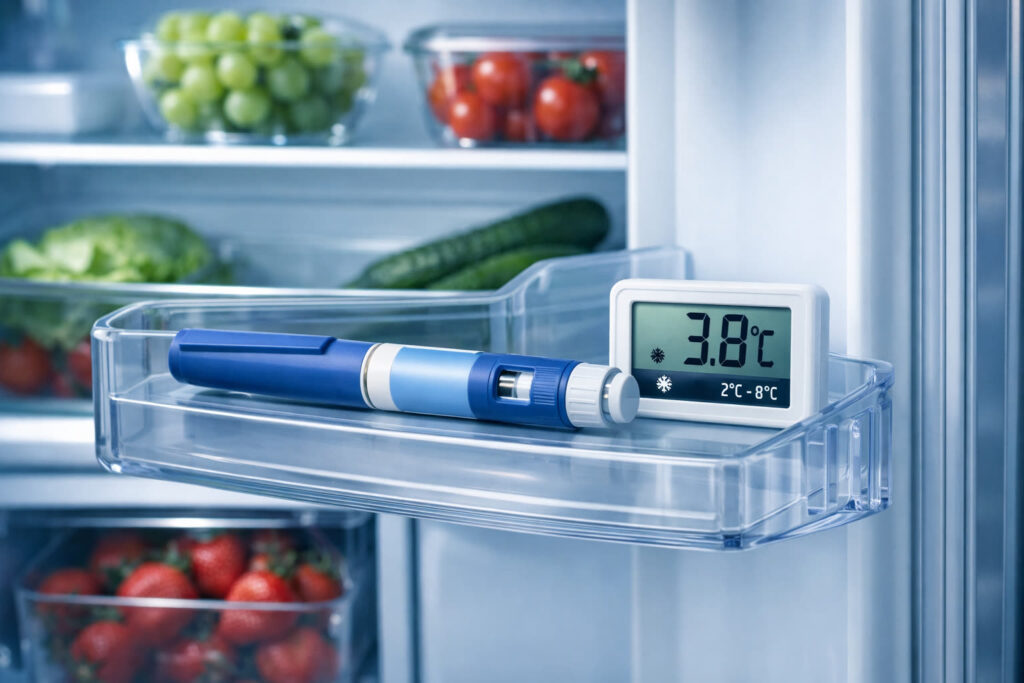
- Keep unopened pens refrigerated between 2°C and 8°C (that’s roughly 36°F to 46°F).
- Once you start using a pen, it can be stored at room temperature, but only up to 30°C (about 86°F), and you should use it within 30 days.
- Avoid freezing at all costs. If your pen freezes, the medication could degrade and become ineffective.
- Humidity matters too. Semaglutide pens should be kept in a dry place—so store them away from steamy bathrooms or near your kitchen sink.
I can’t stress this enough—when I left my pen in the bathroom cabinet (thinking “it’s just a cupboard”), it exposed it to moisture and temperature swings. A week later, my injection felt different, and a quick look online told me I likely compromised it. Lesson learned.
Honestly, I think most people overlook how British homes can sometimes be too humid for sensitive meds, especially during rainy winters or in older houses without great ventilation.

Do’s and Don’ts for Semaglutide Storage
Here’s my straightforward checklist based on what worked and what didn’t for me and plenty of semaglutide users I chatted with in forums and Facebook groups:
- Do: Store unopened pens in the fridge (ideally in the main compartment, not the door, to keep a steady temp).
- Do: Keep pens capped when not in use—dust and light can degrade the medication.
- Do: Use a dedicated storage box or container to avoid accidental knocks or contamination.
- Do: Write the start date on your pen—30 days is your time limit once opened.
- Don’t: Freeze the pens or leave them at temperatures above 30°C.
- Don’t: Keep the pen in direct sunlight or near heat sources like radiators.
- Don’t: Shake the pen vigorously. Semaglutide is delicate.
- Don’t: Store the pen in humid places like bathrooms or kitchens.
This really caught me off guard—when I read “don’t shake the pen,” I thought, “Pfft, who shakes their medication?” but apparently, it’s a common mistake when people are trying to mix or check the solution.
One more tip: if you’re worried about forgetting your semaglutide, set a reminder on your phone not just for the injection times but also for swapping pens before they expire. I’m naturally forgetful, and that little trick saved me a few wasted doses.
How to Dispose of Expired or Used Pens
This one is important because it’s common for people to just toss pens in the bin, but there are better ways (and in the UK, legally required ways) to get rid of used medical sharps.
Here’s what I do:
- Use a proper sharps bin—they sell them cheaply at pharmacies or sometimes your GP practice can provide one.
- When your pen is finished or past its 30-day use window, pop the pen safely into the sharps bin without recapping the needle (less chance of a prick).
- Don’t throw used pens in regular household rubbish or recycling bins.
- When the sharps bin is full, take it to your local pharmacy or participate in your council’s hazardous waste collection service.
It’s a bit of an extra step, sure, but it protects waste collectors and is better for the environment. Some people told me they felt weird about carrying their used pens around, but I find if you have a dedicated pouch or box, it’s nothing to worry about.

Travel Tips for Carrying Semaglutide in the UK
Traveling with semaglutide in the UK is not as tricky as I thought. I’ve taken my pens on weekend trips, train journeys, and even short flights with no problems.
Here’s what’s worked for me:
- Keep your semaglutide pen in a cool insulated bag with ice packs if you’re out for more than 4 hours.
- If you’re flying, pack your medication in your hand luggage, and bring your prescription or a doctor’s note just in case security asks.
- Avoid leaving your pen in parked cars, especially during UK summer days, because temperature can spike fast.
- Take a small thermometer gel pack if you want to be extra cautious; I did that once on a really warm day, and it gave me peace of mind.
- Plan your injection times around your travel itinerary so you’re not scrambling to find a suitable spot when you’re exhausted or on the move.
Honestly, I was genuinely surprised when the TSA-style security at airports in the UK didn’t bat an eye at my pens—just be calm and upfront about it, and you should be fine.
For those living in places with small unpredictable heating systems (like some flats I’ve stayed in London), I recommend checking the storage temperature regularly. A little temperature sensor costs less than a tenner and can save you a fortune in wasted medication.
FAQ: Storage Concerns for Semaglutide Users
Can I store semaglutide pens in the fridge door?
Technically, yes, but I wouldn’t recommend it. The fridge door tends to have more temperature fluctuations due to frequent opening and closing. It’s better to store them in the main compartment for a more consistent environment.
What happens if my semaglutide pen freezes?
If it freezes, it’s best not to use it. Freezing can damage the structure of the medication, making it less effective or even unsafe. If that happens, toss the pen and get a new one. It’s annoying but better safe than sorry.
How long can I use an opened semaglutide pen at room temperature?
You should use it within 30 days once it’s been opened, and keep it below 30°C. After that, effectiveness can drop. Always mark the date when you start using a pen to keep track.
Can I travel with semaglutide in checked luggage?
It’s not advisable. Checked luggage can experience extreme temperatures and pressure changes. Carry it in your hand luggage with a cool pack if possible, and keep it accessible for any security checks.
If you’re interested in more on managing your medication, here are some [INTERNAL_LINK: useful tips on medication management at home]. Also, for those balancing diet and meds, consider our guide on [INTERNAL_LINK: healthy eating while on semaglutide].
To wrap up—semaglutide is a powerful tool for weight loss for many people here in the UK, but treating it with the right care at home makes a big difference. If you keep these storage tips top of mind, it’ll serve you well and keep you on track without unnecessary fuss or waste.
## References
- National Health Service (NHS), “How to store your medicines,” https://www.nhs.uk/conditions/medicines-and-pregnancy/how-to-store-your-medicines/
- Medicines and Healthcare products Regulatory Agency (MHRA), “Patient guidance on medication storage,” https://www.gov.uk/government/organisations/medicines-and-healthcare-products-regulatory-agency
- Novo Nordisk UK, “Ozempic and Wegovy storage instructions,” https://www.novonordisk.co.uk/products/ozempic.html
- British Pharmacological Society, “Safe disposal of sharps,” https://www.bps.ac.uk/news-events/blog/2021/06/10/safe-sharps-disposal