
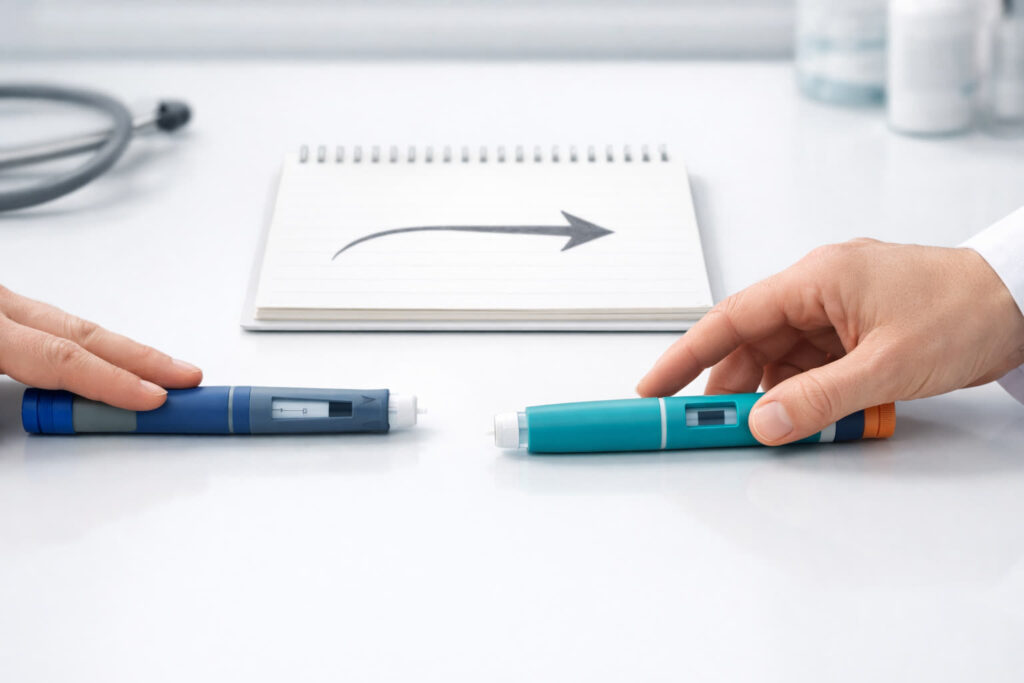
Switching from Saxenda to Semaglutide: What to Expect
Last updated: March 2026
By Dr. James Harley, MBBS, Specialist in Endocrinology and Weight Management
If you’re like many people trying to manage their weight with medication, you might have heard plenty about Saxenda (liraglutide) and Semaglutide. Both are injectable GLP-1 receptor agonists, but switching from Saxenda to Semaglutide isn’t exactly a plug-and-play situation. I’ve worked with plenty of patients through this transition, and honestly, it’s more than just swapping one pen for another. The differences in dosing schedules, side effects, and expectations can trip you up if you’re not prepared. So what does this actually mean? Let’s unpack what to expect when making the switch, especially here in the UK where access routes and NHS policies shape your options.
Understanding the Basics: Saxenda vs Semaglutide
First off, it helps to know the key differences between these two drugs. Saxenda (liraglutide) has been around since about 2014 for weight management, given as a daily injection. Semaglutide, on the other hand, is a newer player for obesity treatment, approved by the European Medicines Agency in 2021 for that purpose and typically administered once weekly.
In terms of how they work, both mimic the hormone GLP-1, which reduces appetite and slows gastric emptying, but Semaglutide is generally considered more potent. For instance, the STEP clinical trials showed that patients on Semaglutide 2.4 mg once weekly lost an average of 15-17% body weight over 68 weeks, which is significantly more than the roughly 5-7% weight loss seen with Saxenda’s 3.0 mg daily dose in the SCALE trials (Pi-Sunyer et al., 2015; Wilding et al., 2021).
Below is a quick comparison:
| Feature | Saxenda (Liraglutide) | Semaglutide |
|---|---|---|
| Dosing Frequency | Daily (3.0 mg) | Weekly (up to 2.4 mg) |
| Weight Loss (avg.) | 5-7% over 1 year | 15-17% over 68 weeks |
| Common Side Effects | Nausea, vomiting, constipation | Similar but often less persistent nausea |
| UK Availability | Prescription, limited NHS access for obesity | Increasing availability, with more NHS pathways emerging |
| Injection Device | Disposable prefilled pen | Prefilled pen, weekly dosing |
Why Switch from Saxenda to Semaglutide?
In my experience, people switch from Saxenda to Semaglutide mainly for better efficacy and convenience. Saxenda requires a daily commitment, which can get tedious and sometimes leads to missed doses. Semaglutide’s once-weekly injection is more manageable, especially for those with busy lifestyles. Plus, the weight loss results appear more impressive in clinical data and real-world use.
However, there’s a catch—semaglutide’s stronger effect often means its side effects can be a bit more intense initially, especially if you’re jumping straight to a higher dose. That’s why a gradual dose escalation is critical. The typical initiation schedule starts at 0.25 mg weekly, increasing by 0.25 mg every 4 weeks until the target dose of 2.4 mg weekly is reached (NICE guidelines, 2023).
Another reason for switching might be cost. Saxenda can be pricey, and although Semaglutide isn’t cheap either, there are more options for sourcing it safely online or through private clinics here in the UK. For those curious about this, you can check out our guide on Where to Find Affordable Semaglutide in the UK.
What to Expect When Making the Switch: Dosage and Timing
Transitioning from Saxenda to Semaglutide isn’t automatic. You can’t simply stop one and start the other at full dose. In fact, experts usually recommend stopping Saxenda and waiting 24-48 hours before beginning Semaglutide to avoid overlapping side effects, especially nausea and vomiting.
Then, the Semaglutide dose typically starts low—0.25 mg once weekly—and is slowly ramped up every 4 weeks. This incremental increase helps your body adjust and reduces gastrointestinal discomfort. I always tell patients, “Patience is key here.” It can take 16-20 weeks to reach the full 2.4 mg dose.
During this period, side effects like nausea, diarrhea, and mild abdominal pain can occur but generally improve over time. If symptoms become intolerable, slowing the dose escalation or temporarily pausing may be necessary. In some cases, the healthcare provider might suggest antiemetic medication to help.
One practical tip: keep a symptom diary during the first 8 weeks to track side effects and any appetite changes. This helps your doctor tailor the plan better. For detailed advice on starting Semaglutide, see What to Expect When Starting Semaglutide.
Side Effects: Similar, But Notice the Differences
Both drugs share a side effect profile, but the intensity can vary. Saxenda users often report nausea, vomiting, constipation, and sometimes injection site reactions. Semaglutide patients experience similar symptoms, but because the drug reaches a higher systemic level, nausea is more frequent in the early weeks—up to 30-40% in some studies (Wilding et al., 2021).
Here’s where personal experience matters. I’ve seen patients who felt Saxenda’s nausea was manageable but struggled with Semaglutide’s initial GI effects. Conversely, others find Semaglutide’s weekly dosing and greater satiety benefits worth the temporary discomfort.
If you’ve combined weight loss medication with lifestyle tweaks before, consider checking out Combining Semaglutide with Intermittent Fasting for potential enhanced results—though always clear this with your healthcare provider.
Serious side effects like pancreatitis or gallbladder issues are rare but real. So, monitoring symptoms and timely reporting during your switch is critical. Never hesitate to contact your GP or specialist if you notice severe abdominal pain or jaundice.
Accessing Semaglutide in the UK: What’s New in 2026?
As of early 2026, NHS access to Semaglutide for obesity is gradually widening, following updated NICE recommendations. Still, it’s not prescribed routinely for everyone; eligibility often hinges on BMI thresholds (≥30 kg/m² or ≥27 kg/m² with comorbidities) and failure of lifestyle interventions.
Private clinics and online pharmacies offer alternatives, but caution is essential to avoid scams or substandard products. Our detailed post Accessing Semaglutide on the NHS in 2026 breaks down eligibility and safe sourcing. I always advise patients to verify licenses and consult their GP before ordering online.
Summary Table: Switching from Saxenda to Semaglutide – Key Points
| Aspect | What to Expect | Tips |
|---|---|---|
| Stopping Saxenda | Stop 1-2 days before starting Semaglutide | Monitor any lingering side effects |
| Starting Semaglutide | Begin at 0.25 mg weekly, increase every 4 weeks | Be patient with dose escalation |
| Common Side Effects | Nausea, vomiting, constipation; may be more pronounced initially | Keep hydrated, eat smaller meals |
| Weight Loss Timeline | Noticeable weight loss often after 12 weeks; | Stick with lifestyle changes alongside medication |
| NHS Access | Limited but expanding; strict criteria apply | Discuss with GP early |
FAQ
Is it safe to switch directly from Saxenda to Semaglutide?
Generally, yes, but a short break of 1-2 days is recommended to reduce the risk of overlapping side effects like nausea. Always follow your healthcare professional’s advice tailored to your situation.
How long does it take to see weight loss on Semaglutide after switching?
Many start noticing weight changes around 8-12 weeks after reaching a therapeutic dose, though some effects on appetite can appear sooner. The full benefit often unfolds over many months.
Can I use Semaglutide if I experienced nausea on Saxenda?
Possibly, but Semaglutide may cause similar or stronger nausea initially. Slow dose escalation and supportive care can help, but discuss side effect management with your doctor.
Is Semaglutide available on the NHS for weight loss?
Yes, but with eligibility criteria. It’s mainly for adults with obesity who haven’t succeeded with lifestyle changes alone. For more details, see Accessing Semaglutide on the NHS in 2026.
Where can I find reliable information on Semaglutide dosing?
The best source is your prescribing healthcare professional. For a clear overview, check Understanding Semaglutide Dosage for Weight Loss Beginners. Additionally, official guidelines like those from NICE and the EMA are invaluable.
Final Thoughts
Switching from Saxenda to Semaglutide can be rewarding but requires a well-planned approach. If you’re considering it, remember that patience with dosage adjustments and close communication with your healthcare provider are crucial. Weight loss medication isn’t a magic bullet—combining the right drug with sustainable lifestyle changes is the real path forward. For those interested in deeper dives, our comparison of Wegovy vs Ozempic for Weight Loss UK 2026 offers useful insights into how different forms of Semaglutide stack up.
For more scientific details, you can refer to the European Medicines Agency’s official [Semaglutide product information](https://www.ema.europa.eu/en/medicines/human/EPAR/ozempic), which provides extensive data on safety and efficacy.
Remember, always consult your GP or specialist before making any medication changes. Your health is worth that extra caution.